
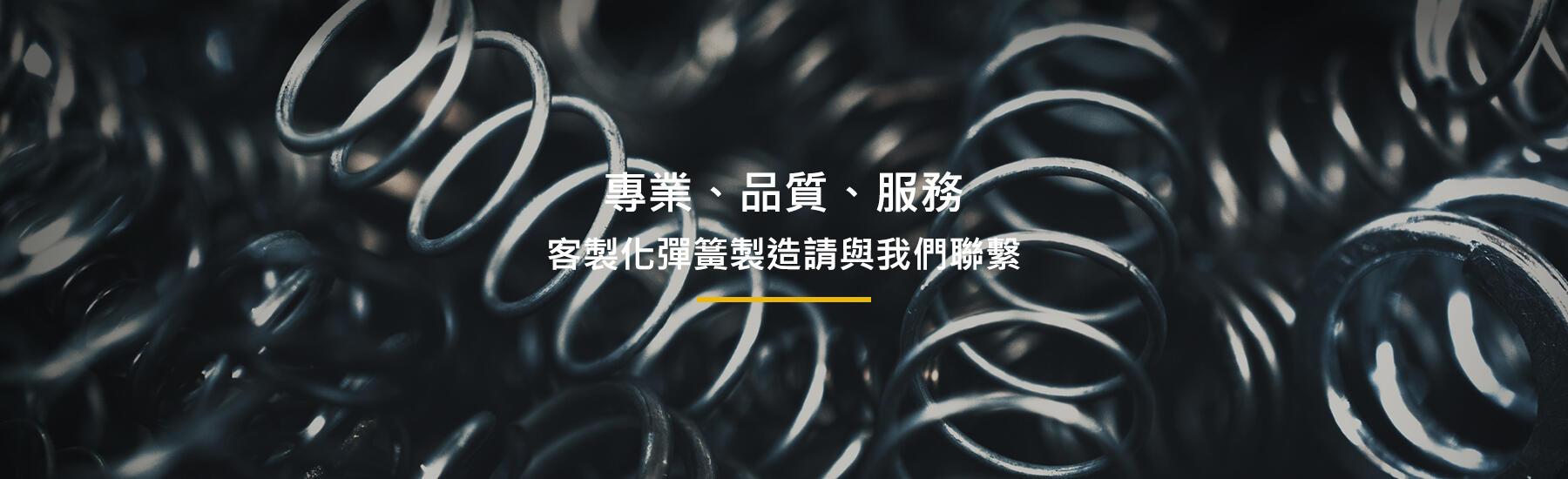

Cushions Spring
Applied across various industries, custom orders are welcome. Please contact us for inquiries.
Shock Absorber Springs
Overview
Shock absorber springs are specially designed to absorb and dampen impact forces, commonly used in automotive suspension systems and mechanical equipment to enhance comfort and stability. Their primary function is to reduce vibrations caused by uneven road surfaces, maintaining vehicle balance and handling performance.
Key Features
1. Energy Absorption
•Effectively absorbs external shocks, reducing vibrations transmitted to the vehicle body, thereby improving driving comfort.
2. Variable Stiffness
•Often designed with adjustable stiffness, allowing the spring to adapt to different load conditions and driving environments.
3. Durability
• Manufactured from high-strength materials, such as medium-carbon steel or high-carbon steel, ensuring consistent performance under high-stress conditions.
Applications
• Automotive Suspension Systems
•Works in conjunction with shock absorbers to create a complete suspension system, reducing the effects of uneven road surfaces and enhancing driving stability.
• Mechanical Equipment
• Widely used in various machinery to minimize vibrations and impacts during operation.
Working Principle
Shock absorber springs function based on Hooke’s Law, which states that the force applied to a spring is proportional to its deformation. When a vehicle moves over an uneven surface, the spring compresses to absorb the impact, and once the impact subsides, it returns to its original shape. This process improves ride comfort while also protecting vehicle components from excessive wear and damage.
In summary, shock absorber springs play a crucial role in modern transportation and machinery, with their design and material selection directly impacting overall performance and lifespan.