

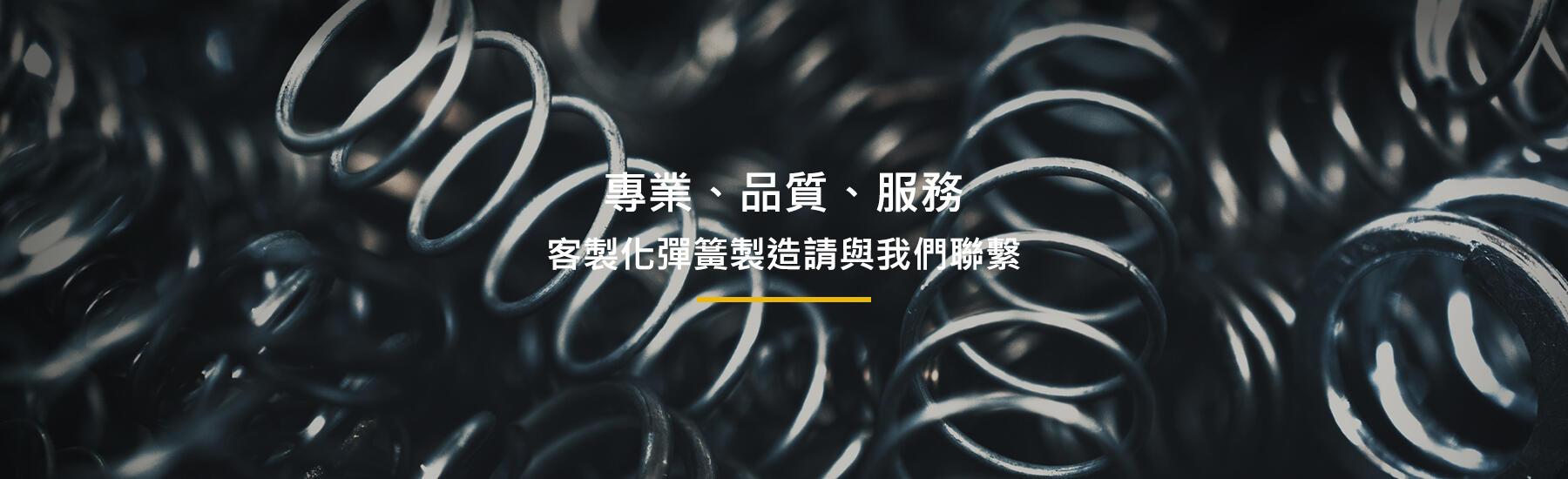
Fastener-Type Springs
Applied across various industries, custom orders are welcome. Please contact us for inquiries.
Fastener-Type Springs: Features & Applications
Overview
Fastener-type springs are critical components used for connecting, securing, and providing elastic force in various applications. These springs help maintain fastening force, reduce vibration-related loosening, and ensure stability under temperature variations. Common types include spring washers, wave washers, and coil spring fasteners.
Common Types of Fastener-Type Springs
Spring Washers
• Designed to maintain fastening pressure, prevent loosening, and provide secure locking under fluctuating temperatures.
•Common variations:
• Cup-Shaped / Conical Spring Washers
•Work in combination with fasteners to retain clamping force, suitable for temperature-variable environments.
• Curved / Saddle-Type Spring Washers
• Similar to flat washers but offer improved fastening force retention.
• Split Lock Washers (Open Spring Washers)
• Exert spring force between the fastener head and base, increasing friction and resistance to rotation, effectively preventing loosening.
Wave Washers (Wave Springs)
•Axially wavy shape allows compression to generate spring force.
• Absorbs axial vibration and reduces noise, making it ideal for high-vibration environments.
Coil Spring Fasteners
• Made from stainless steel, offering high corrosion resistance and long-lasting durability.
• Designed in a helical spring form, allowing locking and unlocking via a 90-degree rotation.
Spring-Locking Fasteners
• Manufactured from stainless steel with vibration-resistant polished finishing to enhance performance in high-stress environments.
Design Considerations
1. Mechanical Strength & Performance
•The strength of the spring washer significantly impacts its performance.
•If too weak, it reduces clamping force. If too strong, it may cause excessive load on the fastener, reducing fatigue resistance.
2. Specialized Materials
•When designing with specialty materials, ensure strict production quality control (e.g., tool steel, spring steel, with precise machining and heat treatment).
3. Surface Treatment
• In coating or electroplating processes, hydrogen embrittlement can be more severe in tool steel and spring steel than in carbon or alloy steel fasteners, requiring proper treatment to maintain durability.
Conclusion
Fastener-type springs play a crucial role in securing mechanical components, offering enhanced fastening force, vibration resistance, and reliability. Proper design, material selection, and surface treatment are essential for maximizing performance and longevity in industrial and mechanical applications.